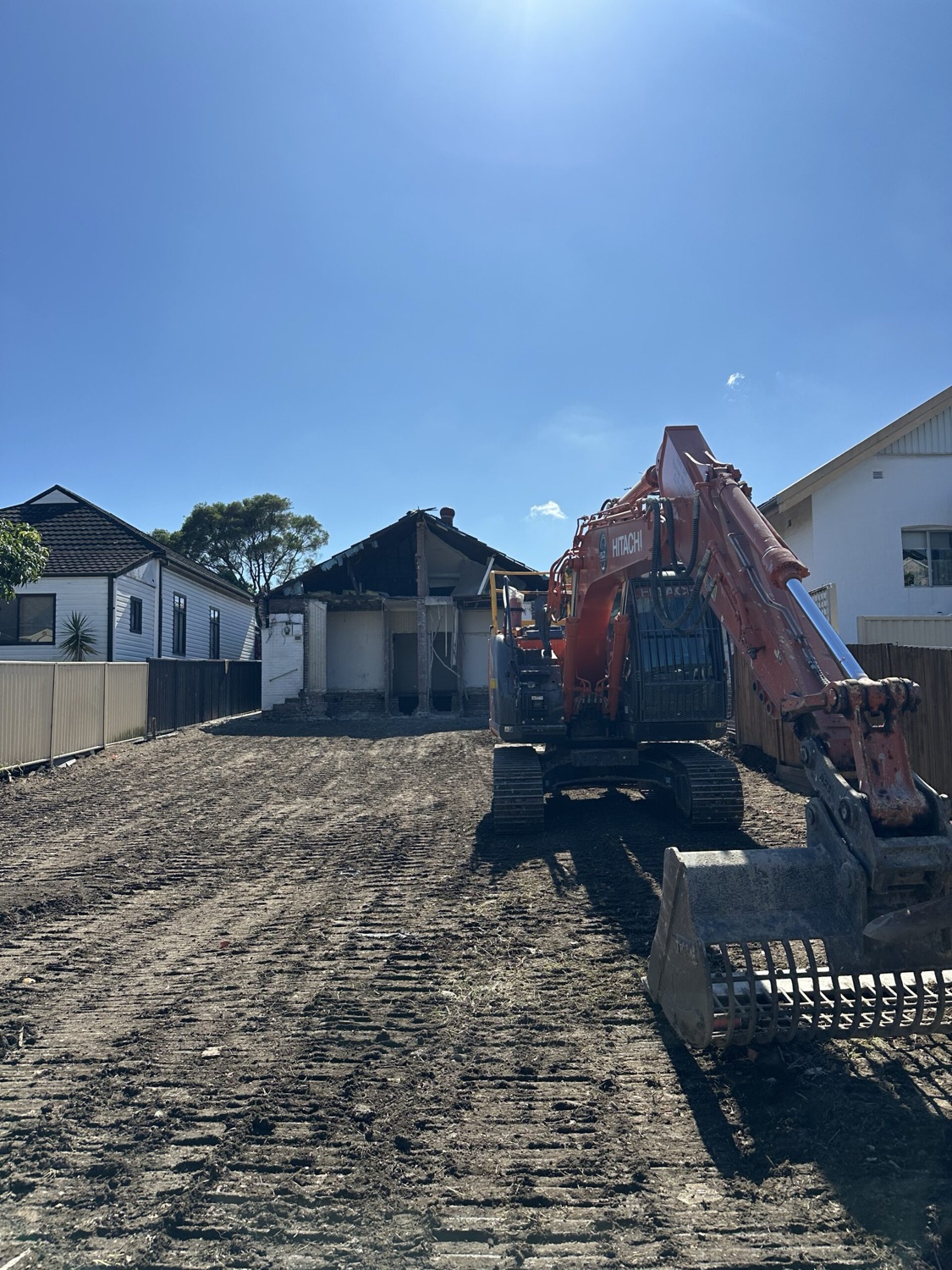
- Indicative 2026 Sydney prices: single-storey timber about $18,000–$28,000, single-storey brick about $25,000–$40,000, two-storey about $35,000–$55,000+.
- Asbestos removal, slab and footing removal, access and site clearance are the biggest variables.
- Compare quotes on the same scope, and check asbestos, slab removal and disposal are all included.
- Utility disconnection fees and approval costs are usually separate from the demolition price.
“How much will it cost to knock down my house?” is the first question almost every Sydney homeowner asks — and the honest answer is that it depends. A straightforward single-storey weatherboard on an easy block sits at one end of the range; a double-brick two-storey home with asbestos and tight access sits at the other. This 2026 guide walks through the indicative house demolition cost in Sydney, the factors that actually move the number, and how to read a quote so you can budget properly and compare fairly.
Indicative house demolition cost in Sydney (2026)
Prices vary from site to site, so treat these as a rough guide only — the real figure comes from a site inspection. As a general indication for a standard residential knockdown in the Sydney metro area in 2026:
- Single-storey timber or weatherboard home — roughly $18,000 to $28,000
- Single-storey brick or double-brick home — roughly $25,000 to $40,000
- Two-storey home — roughly $35,000 to $55,000 and up, depending on size and construction
- Asbestos removal (if present) — commonly $2,000 to $15,000+, depending on the type and quantity
- Slab, footings and driveway removal — typically several thousand dollars on top of a basic knockdown
- Pool removal — roughly $6,000 to $18,000 for a partial removal and $10,000 to $35,000+ for a full removal, depending on the pool type and access (pool removal guide)
Those ranges cover the demolition, waste disposal and clean-up for a typical block. They can move up or down quickly once asbestos, difficult access or a full site clearance come into play — which is exactly why a fixed, itemised quote after an inspection beats a per-square-metre guess over the phone.
What drives the price
Several factors move the number up or down, and understanding them helps you see why two quotes for the “same” job can look very different:
- Size and construction — a larger home, or heavy double-brick and concrete, means more material to break out, load and dispose of.
- Asbestos — homes built or renovated before the late 1980s often contain it, and licensed removal, air monitoring and tracked disposal add cost (but are non-negotiable and, for many quantities, legally required).
- Access — a tight inner-city or Eastern Suburbs block, a narrow frontage, a steep driveway or overhead power all affect the plant used and the time on site.
- Disposal and recycling — tipping fees vary by material and volume; separating concrete, brick, steel and clean timber for recycling can actually reduce landfill costs.
- Slab, footings and hardstand — removing the slab, driveways, paths and footings so your builder gets a clean set-out adds to a basic knockdown.
- Site clearance — trees, pools, retaining walls, sheds and outbuildings all add scope, and are worth pricing up front rather than as variations later.
- Service disconnections — power, gas, water and telecommunications must be disconnected before work starts; the utility charges are usually separate, but the coordination is part of a good demolisher’s job.
Demolition and excavation together
On most knockdown-rebuilds, the demolition doesn’t stand alone — the block also needs to be cut and levelled for the new slab. Where the same contractor handles both demolition and excavation, you avoid a second mobilisation, a handover gap and the finger-pointing that happens when the ground throws up a surprise between two separate crews. When you’re comparing prices, it’s worth asking what the combined demolition-and-excavation number looks like, not just the knockdown on its own.
What a good quote includes
A quote you can trust is itemised and fixed after a site inspection. It should clearly spell out approvals guidance, service disconnections, asbestos handling, the demolition itself, waste disposal and site clean-up, plus the program. Watch for quotes that look cheap because they quietly exclude asbestos, slab removal or cart-away — those costs don’t disappear, they just reappear on the final invoice as variations. A complete quote might look slightly higher on paper but end up cheaper once the job is done.
How to compare quotes fairly
Get everything in writing, confirm the contractor is licensed and insured, and check that public-liability cover and AS 2601 compliance are included. Make sure each quote covers the same scope — same slab treatment, same asbestos allowance, same site clearance — so you’re comparing like with like. The cheapest headline number is rarely the cheapest job once variations start, and an unlicensed or uninsured operator is a risk no saving justifies.
House demolition cost at a glance (Sydney, 2026)
| Item | Indicative cost | Notes |
|---|---|---|
| Single-storey timber, weatherboard or fibro home | roughly $18,000 – $28,000 | Fibro homes usually need asbestos removal on top |
| Single-storey brick or double-brick home | roughly $25,000 – $40,000 | More masonry to break out and recycle |
| Two-storey home | roughly $35,000 – $55,000+ | Size, construction and access drive the range |
| Asbestos removal | commonly $2,000 – $15,000+ | See the asbestos removal cost guide |
| Pool removal | roughly $6,000 – $35,000+ | Partial vs full removal; see the pool removal guide |
| Site cut for the new slab | roughly $3,000 – $15,000+ | See the excavation cost guide |
Indicative ranges only, reviewed October 2026. Your fixed price comes from a site inspection.
Costs that are usually separate
Some costs sit outside the demolition contract, and it helps to budget for them early:
- Approval fees for the CDC or DA, and any certifier inspection fees
- Utility disconnection charges from the electricity network, gas provider and Sydney Water
- Reports such as dilapidation reports, arborist reports or a hazardous materials survey, where your approval requires them
- Tree removal where council approval is needed
- Temporary accommodation and storage while the old house comes down and the new one is built
Our demolition permits guide explains the approval process, and the demolition timeline guide shows how long each stage usually takes.
Get a fixed price for your block
The only way to know what your knockdown will cost is a site inspection. H&R Demolition & Excavation provides free, no-obligation inspections and fixed, itemised quotes for house demolition across Sydney — including asbestos removal and excavation under the one roof. Get in touch and we’ll walk your block with you and give you a straight number you can budget against.
Frequently asked questions
Sources & further reading
- SafeWork NSW — Asbestos
- NSW Planning Portal — Demolition as complying development
- NSW EPA — Classifying waste
- NSW Government — Licence check
Requirements referenced in this article were checked against the sources above on 20 October 2026. Prices are indicative and reviewed periodically — your fixed price always comes from a site inspection.
H&R Demolition & Excavation
H&R is a licensed and insured Sydney demolition, asbestos removal and excavation contractor. Our guides are written from the work our crews carry out on Sydney sites and are checked against current NSW requirements from SafeWork NSW, the NSW EPA and NSW Planning before they are published.
Ready to talk to the team?
Free, no-obligation quotes for demolition, asbestos and excavation across Sydney.
More Articles
 Costs
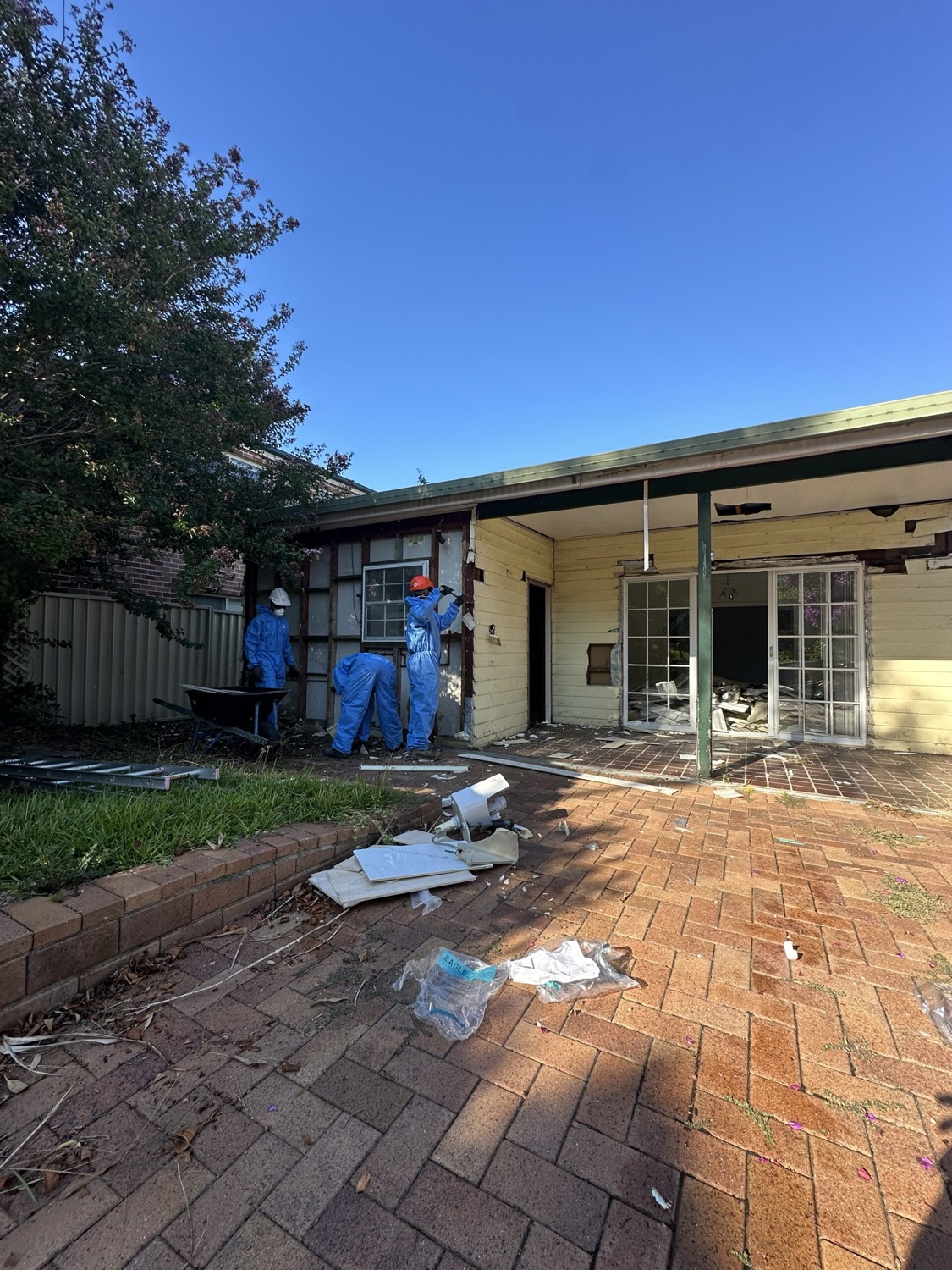
Asbestos Removal Cost in Sydney (2026): Prices, Factors & What’s Included
Indicative 2026 asbestos removal prices for Sydney — per square metre, roofs, small jobs and friable work — plus what drives the cost and what a complete quote must include.
Read Article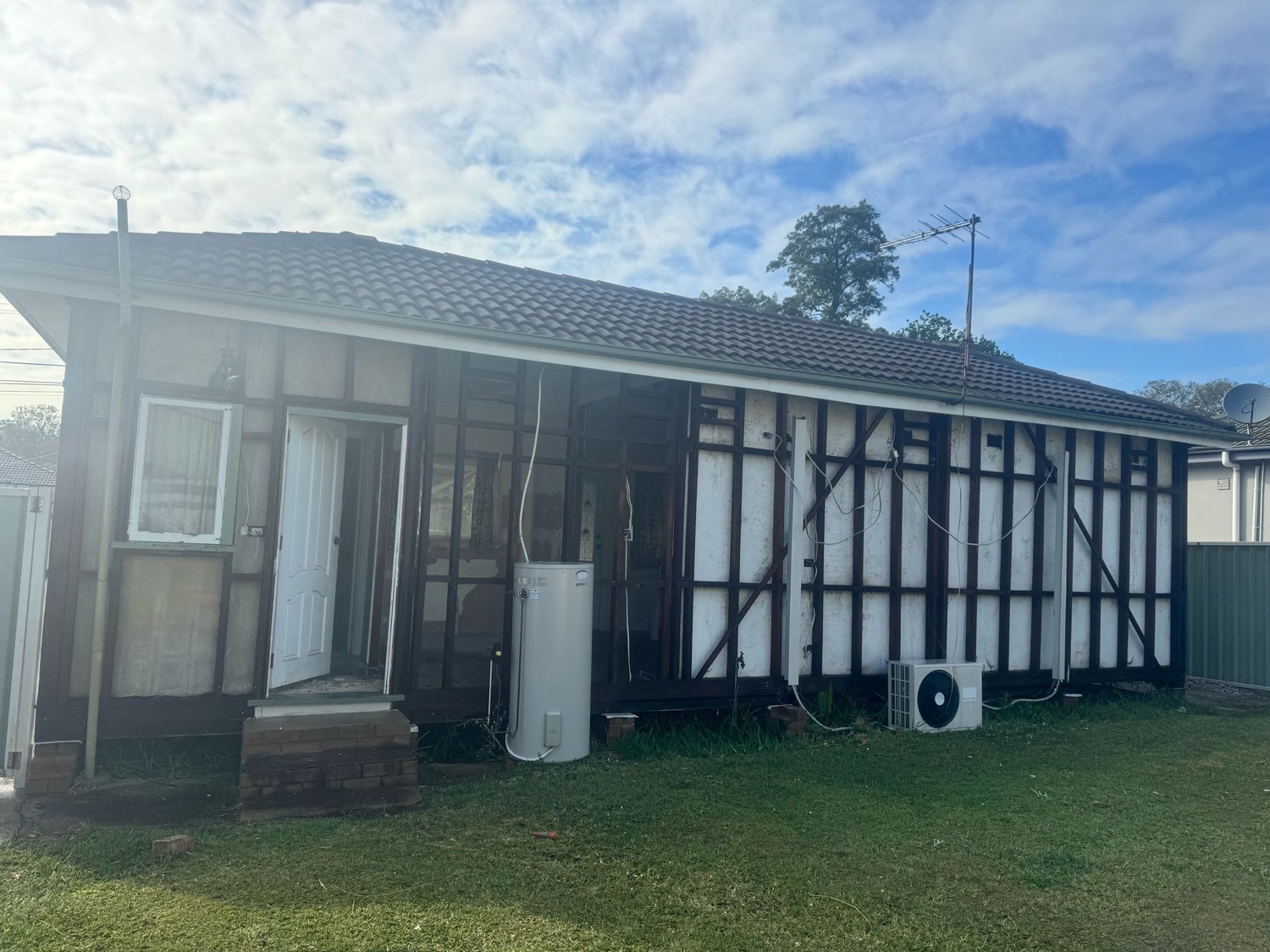 Costs
Excavation Cost in Sydney (2026): Site Cuts, Bulk Excavation & Spoil Removal
What excavation really costs in Sydney in 2026 — hourly machine and truck rates, typical site cut and bulk dig prices, and why spoil classification is the cost most people miss.
Read Article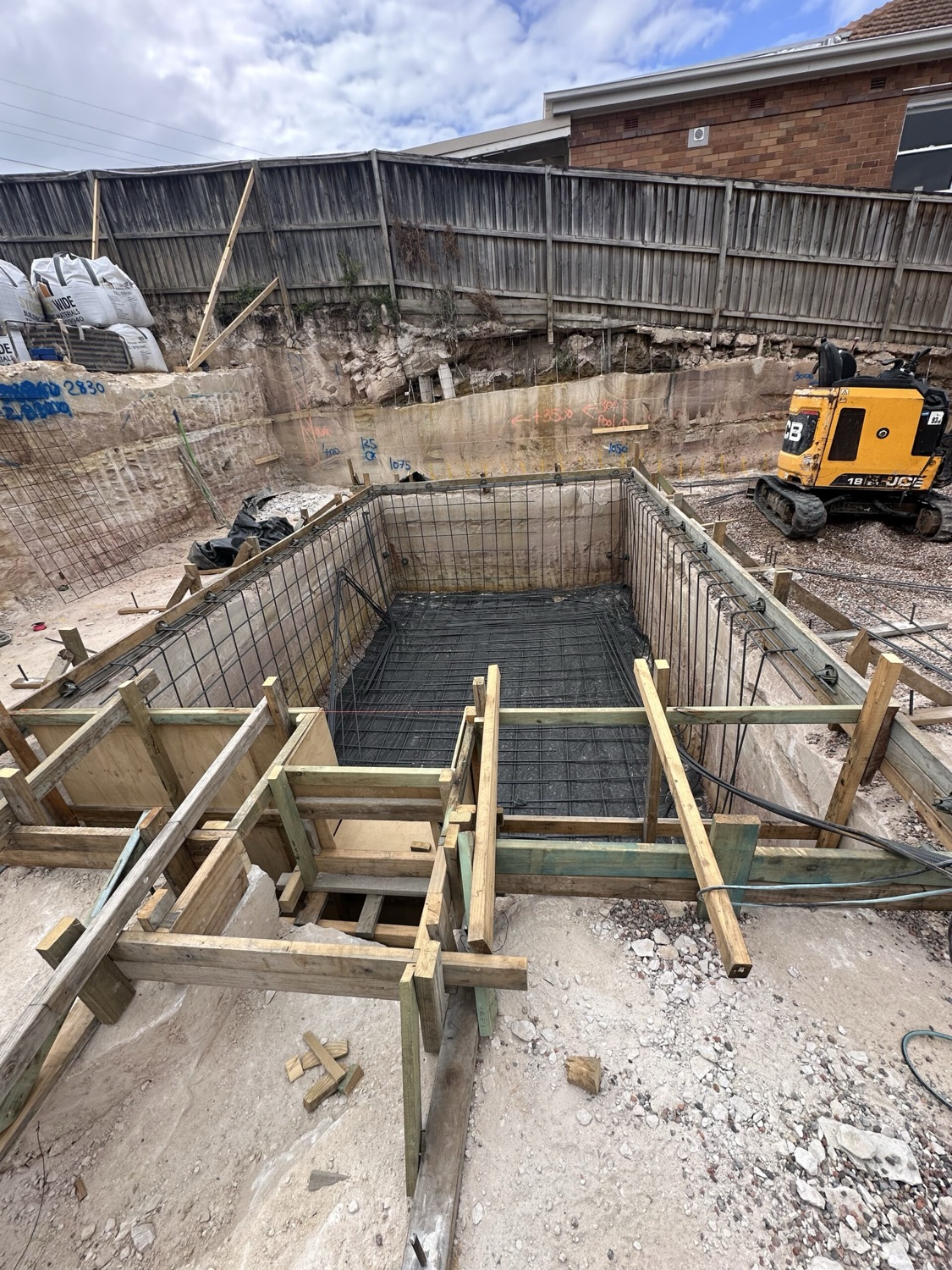 Guides
Pool Removal in Sydney: Cost, Process & Approvals (2026 Guide)
Partial or full removal? What pool removal costs in Sydney in 2026, how the process works step by step, which approvals to check, and what to know before building over the area.
Read Article