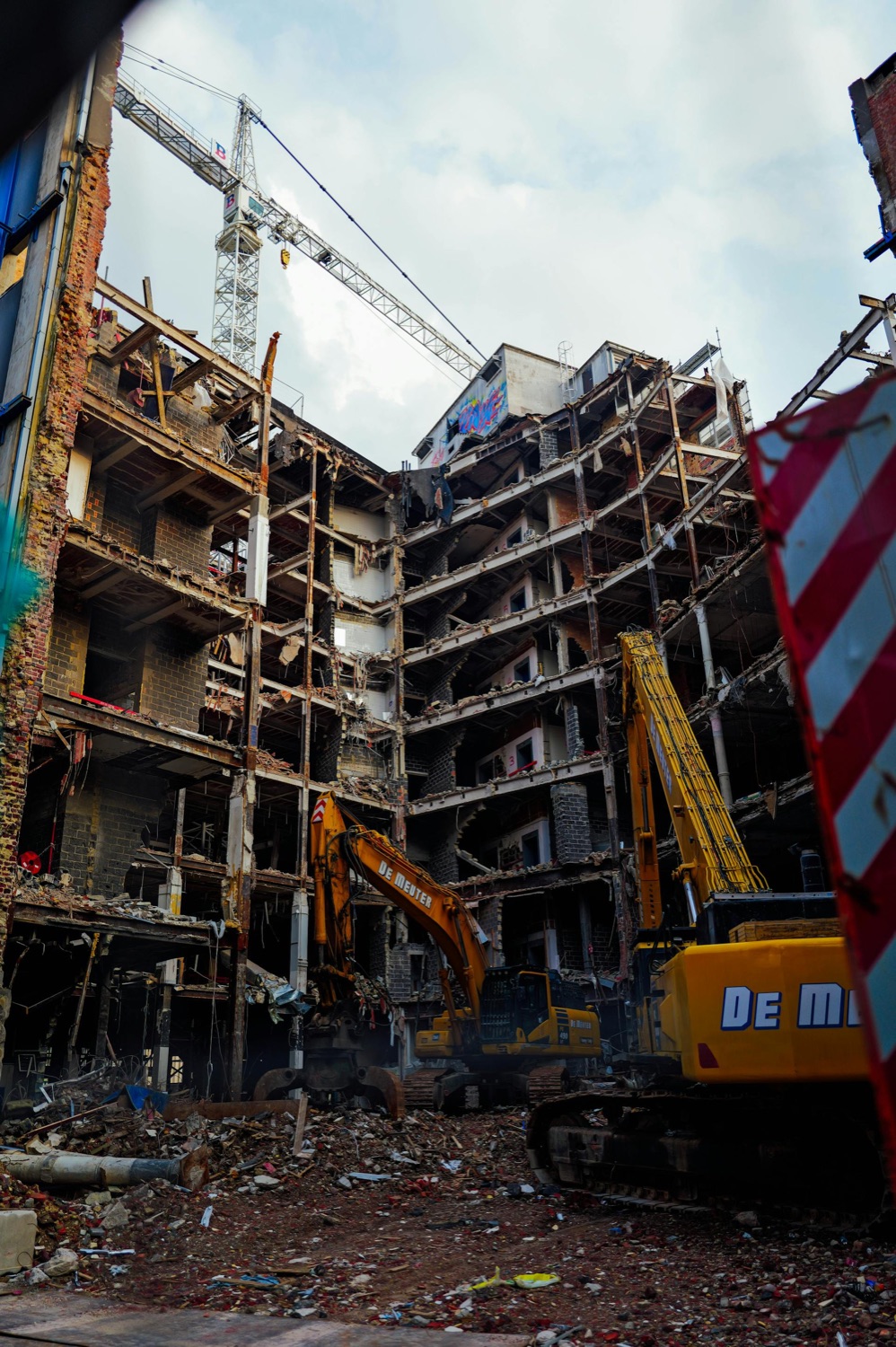
- Most house demolitions in Sydney need approval: either a complying development certificate (CDC) or a development application (DA).
- A CDC is usually faster, but it is not available for heritage items and most demolition in heritage conservation areas, which need a DA.
- Demolition must be carried out in line with AS 2601, with a written demolition plan and a safe work method statement (SWMS).
- Asbestos must be identified and removed by a licensed removalist before the main demolition, and neighbours and council must be notified before work starts.
Yes. In most cases you need approval to demolish a house in Sydney. The type of approval depends on the property: many homes can be demolished under a complying development certificate (CDC), which is usually the faster path, while heritage-listed homes and most homes in heritage conservation areas need a development application (DA) to council. Whichever pathway applies, the demolition itself must follow Australian Standard AS 2601, and asbestos, service disconnections and neighbour notification all need to be handled before machines arrive.
This guide explains the approval pathways in plain English, how to check which one applies to your property, what AS 2601 and SafeWork NSW require, and the checklist we work through on every Sydney house demolition. It is general information, so always confirm the requirements for your property with your certifier or council.
The three approval pathways in NSW
| Pathway | When it applies | Who approves it | Typical timeframe |
|---|---|---|---|
| Exempt development | Minor structures that meet the Codes SEPP conditions, e.g. some small sheds | No approval needed if every condition is met | None |
| Complying development (CDC) | Houses, garages, pools and industrial buildings that meet the Demolition Code standards | Council or a registered certifier | Often 2–4 weeks |
| Development application (DA) | Heritage items, most heritage conservation area demolition, sites that don’t meet the code | Council | Commonly 6–12+ weeks |
Timeframes are typical, not guaranteed. A DA for demolition is often lodged together with the DA for the new home.
Exempt development
Some very minor demolition needs no approval at all. Under the State Environmental Planning Policy (Exempt and Complying Development Codes) 2008, known as the Codes SEPP, removing certain small structures that would themselves be exempt to build can be exempt development. Every condition must be met, the property must not be a heritage item, and the work must still be carried out in line with AS 2601. A house is never exempt development.
Complying development certificate (CDC)
The Demolition Code in the Codes SEPP allows a dwelling, an industrial building and associated structures such as garages and swimming pools to be demolished as complying development, provided they meet the standards in the code. A CDC is issued by your council or a registered certifier, usually much faster than a DA, and comes with standard conditions that must be followed. In a heritage conservation area, only limited work can be demolished under a CDC, such as some detached structures and internal elements, so a full house demolition in those areas generally needs a DA.
Development application (DA)
Where a CDC is not available, demolition needs development consent from council. This is common for heritage items, homes in heritage conservation areas and sites with other constraints. DAs are lodged through the NSW Planning Portal and assessed on their merits, which takes longer. For knockdown rebuilds, the demolition is often included in the same DA as the new home, so both are approved together. A DA consent will list conditions, such as dilapidation reports on neighbouring homes, work hours and dust controls.
How to check which pathway applies to your property
- Get a planning certificate (section 10.7 certificate) from your council. It shows the zoning, whether the property is a heritage item or in a heritage conservation area, and whether complying development can be carried out.
- Look up the property on the NSW Planning Portal, which shows planning controls such as heritage, flood and bushfire mapping.
- Check for site constraints such as bushfire-prone land, flood-affected land or easements, which can add conditions.
- Ask a certifier whether your demolition can be approved as complying development. If it cannot, they will tell you why, and you can prepare a DA instead.
- Talk to your demolition contractor early. A site inspection identifies asbestos, access issues and neighbour risks that affect the approval conditions and the program.
What AS 2601 requires
AS 2601 — The demolition of structures — is the Australian Standard for planning and carrying out demolition. Exempt demolition must be carried out in line with it, and CDC and DA consents typically include a condition requiring it. In practice, AS 2601 means:
- A written demolition plan setting out the method, the sequence and the controls for the job
- Identification of hazardous materials, especially asbestos, before work starts
- Safe disconnection of services before demolition
- Protection of the public and adjoining properties, including fencing, hoarding and exclusion zones
- A controlled demolition sequence so that no part of the structure becomes unstable
- Planned waste handling, with materials separated and taken to appropriate facilities
Demolition is also high-risk construction work under NSW work health and safety laws, so the contractor must prepare a site-specific safe work method statement (SWMS). See our Safety & Compliance page for the documents we provide.
SafeWork NSW licences and notifications
| Work | What is required |
|---|---|
| Load-bearing structure 6–15 m high, or machinery on a suspended floor | SafeWork NSW restricted demolition licence |
| Structures over 15 m, pre- or post-tensioned elements, floor propping, explosives | SafeWork NSW unrestricted demolition licence |
| Demolition of a structure over 6 m, machinery on a suspended floor, or explosives | Notify SafeWork NSW at least 5 days before work starts |
| Removing more than 10 m² of bonded asbestos | Class B asbestos licence (or Class A) |
| Removing any friable asbestos | Class A asbestos licence, with air monitoring and clearance by a licensed assessor |
| Licensed asbestos removal | Notify SafeWork NSW at least 5 days before work starts |
| All demolition work | A site-specific SWMS; work planned in line with AS 2601 |
Summary only. Check the SafeWork NSW guidance linked below for the current requirements.
A typical single-storey house is under 6 metres high, so it may not need a SafeWork demolition licence, but it still needs approval, a demolition plan, a SWMS and licensed asbestos removal where asbestos is present. You can check any contractor’s licence on the NSW Government licence check.
Asbestos must be removed before demolition
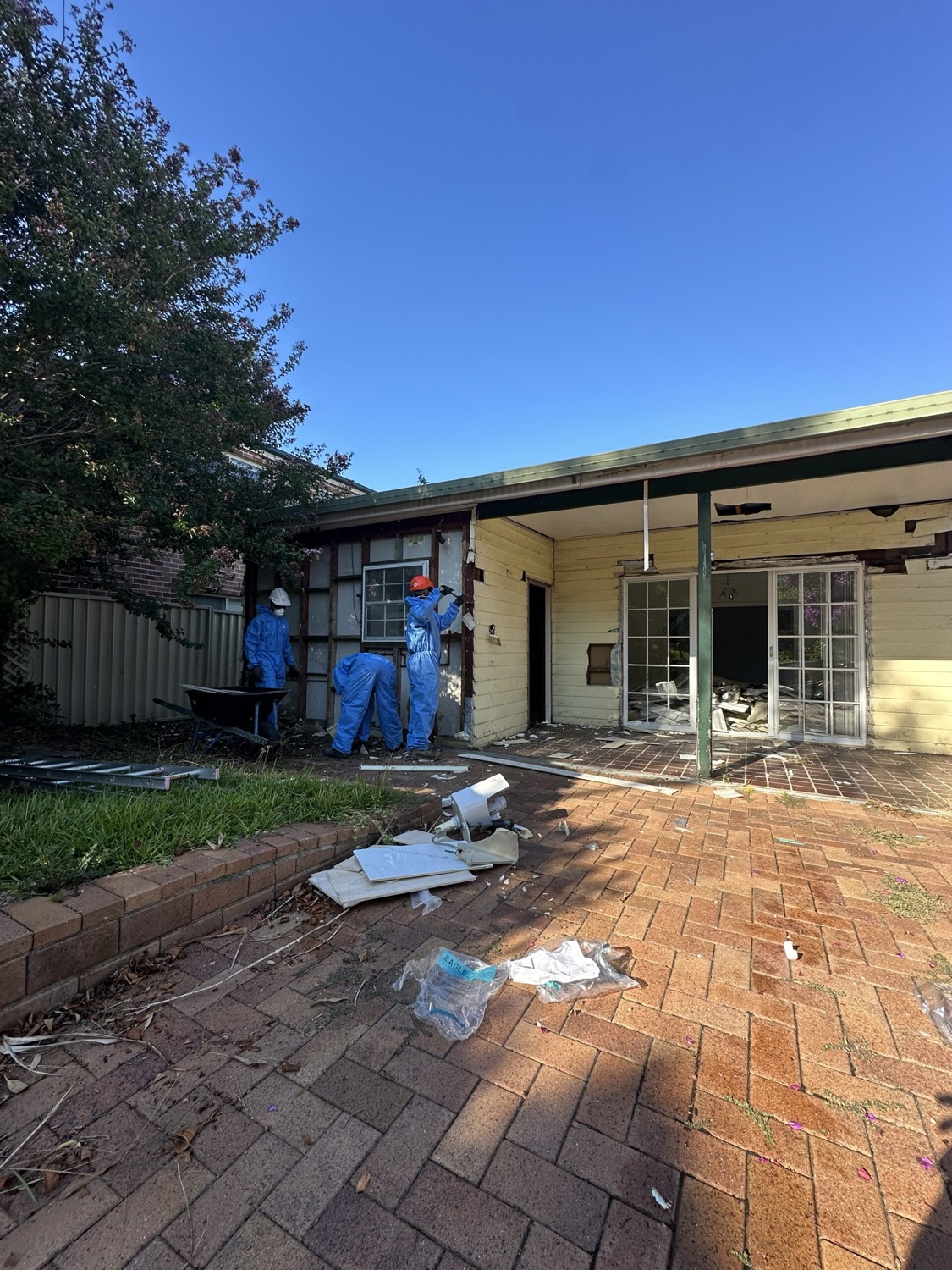
Many Sydney homes built before the late 1980s contain asbestos in eaves, wall sheeting, wet areas, flooring or fencing. Asbestos that is likely to be disturbed must be identified and removed before the main demolition. Removing more than 10 m² of bonded asbestos, or any friable asbestos, needs a licensed removalist. Asbestos waste must go to a facility licensed to accept it, and loads over 100 kg or 10 m² must be tracked through the NSW EPA’s WasteLocate system. See our asbestos removal service and asbestos removal cost guide.
Neighbours, council notices and site conditions
- Principal certifier and notice of commencement. For complying development, a principal certifier must be appointed and council given notice, usually at least two days before work starts.
- Neighbour notification. Neighbours must be notified in writing before demolition begins. Your CDC or DA conditions set out who must be notified and when.
- Site signage and fencing. Signs showing the principal certifier and contractor contact details, and secure site fencing or hoarding.
- Dilapidation reports. Often required for neighbouring properties, especially on tight blocks and shared walls.
- Road and footpath permits. Council permits may be needed where trucks, bins or hoardings occupy the road or footpath.
- Work hours. Noisy work must stay within the hours in your consent conditions.
Service disconnections
Before demolition starts, electricity, gas, water and sewer, and telecommunications must be disconnected and made safe. These requests can take several weeks, so they should be lodged as soon as the approval is under way. Our demolition timeline guide explains how disconnections fit into the overall program.
What happens if you demolish without approval?
Demolishing without the required approval is an offence under the NSW Environmental Planning and Assessment Act 1979. Councils can issue stop work orders, penalty notices and fines, and unapproved demolition can delay or complicate the approval of your new home. Using a licensed contractor who checks the approval before starting protects you.
Our house demolition approval checklist
- Planning certificate obtained and heritage, flood and bushfire status checked
- Approval pathway confirmed (CDC or DA) and the approval issued
- Principal certifier appointed and notice of commencement given
- Neighbours notified in writing and dilapidation reports completed where required
- Service disconnections completed for power, gas, water and telecommunications
- Asbestos identified, removed by a licensed removalist and cleared
- Demolition plan (AS 2601) and SWMS prepared, and SafeWork NSW notified where required
- Site fenced, signed and protected, with permits for any road or footpath occupation
H&R Demolition & Excavation works through this checklist on every Sydney house demolition. We guide you on the approval pathway, prepare the demolition plan and SWMS, remove asbestos under our own licence and coordinate the timing with your certifier and builder. Book a free site inspection to get a fixed price and a realistic program.
Frequently asked questions
Sources & further reading
- NSW Planning Portal — Demolition as complying development
- NSW Department of Planning — Planning Portal
- SafeWork NSW — Restricted demolition licence
- SafeWork NSW — Unrestricted demolition licence
- SafeWork NSW — Demolition work
- SafeWork NSW — Asbestos
- NSW EPA — Dealing with household asbestos
- NSW Government — Licence check
- Standards Australia — AS 2601 The demolition of structures
Requirements referenced in this article were checked against the sources above on 20 October 2026. Prices are indicative and reviewed periodically — your fixed price always comes from a site inspection.
H&R Demolition & Excavation
H&R is a licensed and insured Sydney demolition, asbestos removal and excavation contractor. Our guides are written from the work our crews carry out on Sydney sites and are checked against current NSW requirements from SafeWork NSW, the NSW EPA and NSW Planning before they are published.
Ready to talk to the team?
Free, no-obligation quotes for demolition, asbestos and excavation across Sydney.
More Articles
 Costs
Asbestos Removal Cost in Sydney (2026): Prices, Factors & What’s Included
Indicative 2026 asbestos removal prices for Sydney — per square metre, roofs, small jobs and friable work — plus what drives the cost and what a complete quote must include.
Read Article Costs
Excavation Cost in Sydney (2026): Site Cuts, Bulk Excavation & Spoil Removal
What excavation really costs in Sydney in 2026 — hourly machine and truck rates, typical site cut and bulk dig prices, and why spoil classification is the cost most people miss.
Read Article Guides
Pool Removal in Sydney: Cost, Process & Approvals (2026 Guide)
Partial or full removal? What pool removal costs in Sydney in 2026, how the process works step by step, which approvals to check, and what to know before building over the area.
Read Article