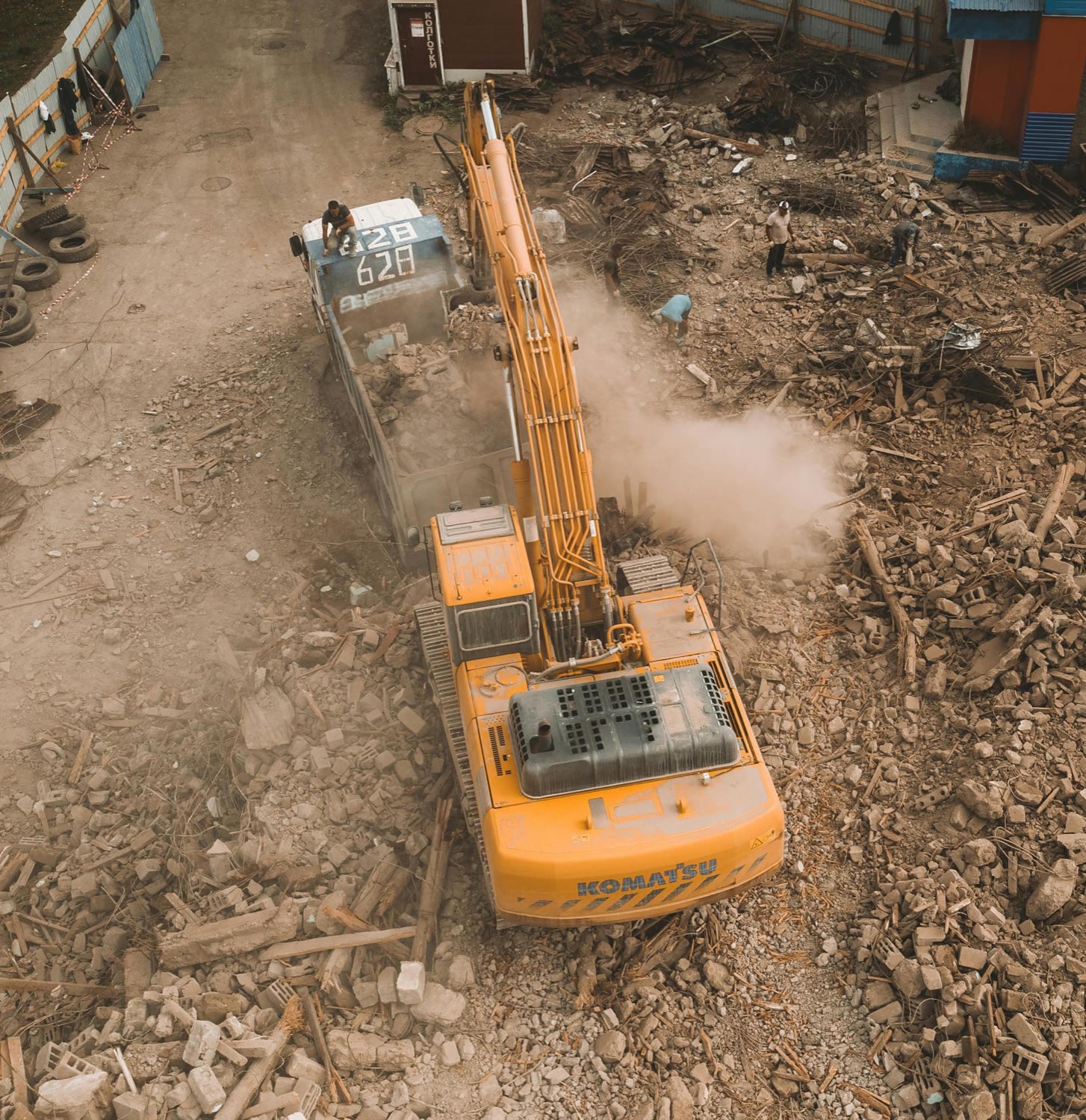
- Most demolition materials, including concrete, brick, steel and clean timber, can be recycled if they are separated on site.
- Waste must be classified under NSW EPA guidelines before it leaves the site; that determines where it can go.
- Recycling usually costs less than landfill, because the NSW waste levy applies to landfilled waste.
- Ask for disposal dockets so you have a record of where every load went.
Demolition has a reputation for waste, but a modern, well-run site recycles a surprising amount of what it removes. At H&R, recycling isn’t an afterthought — it’s built into how we plan every job, cutting landfill, lowering disposal costs and shrinking the footprint of your project.
Sorted at the source
The key to recycling demolition waste is separating materials rather than mixing them into one skip. On our sites, we separate the major streams as the structure comes down:
- Concrete and brick — crushed and re-used as road base and aggregate.
- Structural steel and metals — recovered and recycled.
- Clean timber — recovered for re-use or processing.
- Plasterboard and other materials — directed to the appropriate stream.
Tracked and documented
Responsible disposal isn’t just about recycling — it’s about proving it. We track waste to EPA requirements, using licensed facilities and keeping the documentation that shows where material went. For commercial and development projects, that paper trail is often part of the compliance and handover.
What happens to each material
| Material | Where it usually goes |
|---|---|
| Concrete and brick | Crushed at a recycling facility into recycled aggregate and road base |
| Structural steel, roofing and metals | Metal recyclers; scrap value can offset part of the cost |
| Clean timber | Reuse, or processing into mulch and other products |
| Green waste | Mulching and composting |
| Plasterboard | Specialist recycling where it is clean and separated |
| Excavated natural material | Reuse as fill where it meets the EPA requirements, or disposal by classification |
| Asbestos | Only to a facility licensed to accept it, never recycled |
Waste classification and tracking
Before waste leaves a site, it must be classified under the NSW EPA’s waste classification guidelines. The classification decides which facilities can accept it and how much disposal costs. Asbestos waste over 100 kg or 10 m² must be tracked through the EPA’s WasteLocate system, and a good contractor keeps disposal dockets for every load. Our excavation cost guide explains how soil classification changes disposal costs.
Why recycling lowers costs
Waste sent to landfill in NSW attracts a waste levy on top of the facility’s gate fee, so landfilling mixed rubble is usually the most expensive option. Separating materials on site lets concrete, brick and steel go to recyclers instead, which generally costs less and, for steel, can return some value. On large industrial and commercial jobs, that difference can be significant.
Salvage and reuse before demolition
The best way to reduce demolition waste is to reuse materials before the building comes down. A soft strip removes fixtures, fittings, doors, timber floors and joinery so they can be reused, sold or recycled, and it leaves cleaner concrete and brick for recycling. Bricks, sandstone blocks, hardwood beams and heritage features can often be salvaged on older Sydney homes. See our strip out service for how soft stripping works.
Recycling on commercial and industrial projects
Many developers, builders and building owners now report on construction and demolition waste for sustainability ratings or tender requirements. That relies on accurate records: the material types, weights or volumes, and the facilities they went to. We keep disposal dockets for every load so that information is available at handover.
Questions to ask your demolition contractor
- How will materials be separated on site?
- Which facilities will each material go to?
- Will you provide disposal dockets for every load?
- How is asbestos handled, tracked and disposed of?
- Can you report the share of material recycled, if our project needs it?
Why it matters for your project
Diverting material from landfill reduces tipping fees, supports your project’s sustainability credentials, and is simply the right way to work. When you choose a recycle-first demolisher, you get a cleaner site, a smaller footprint and, often, a better price than sending everything to the tip.
Recycling is standard on every H&R job. If sustainability matters to your build, talk to us about how we handle your demolition waste.
Frequently asked questions
Sources & further reading
Requirements referenced in this article were checked against the sources above on 20 October 2026. Prices are indicative and reviewed periodically — your fixed price always comes from a site inspection.
H&R Demolition & Excavation
H&R is a licensed and insured Sydney demolition, asbestos removal and excavation contractor. Our guides are written from the work our crews carry out on Sydney sites and are checked against current NSW requirements from SafeWork NSW, the NSW EPA and NSW Planning before they are published.
Ready to talk to the team?
Free, no-obligation quotes for demolition, asbestos and excavation across Sydney.
More Articles
 Costs
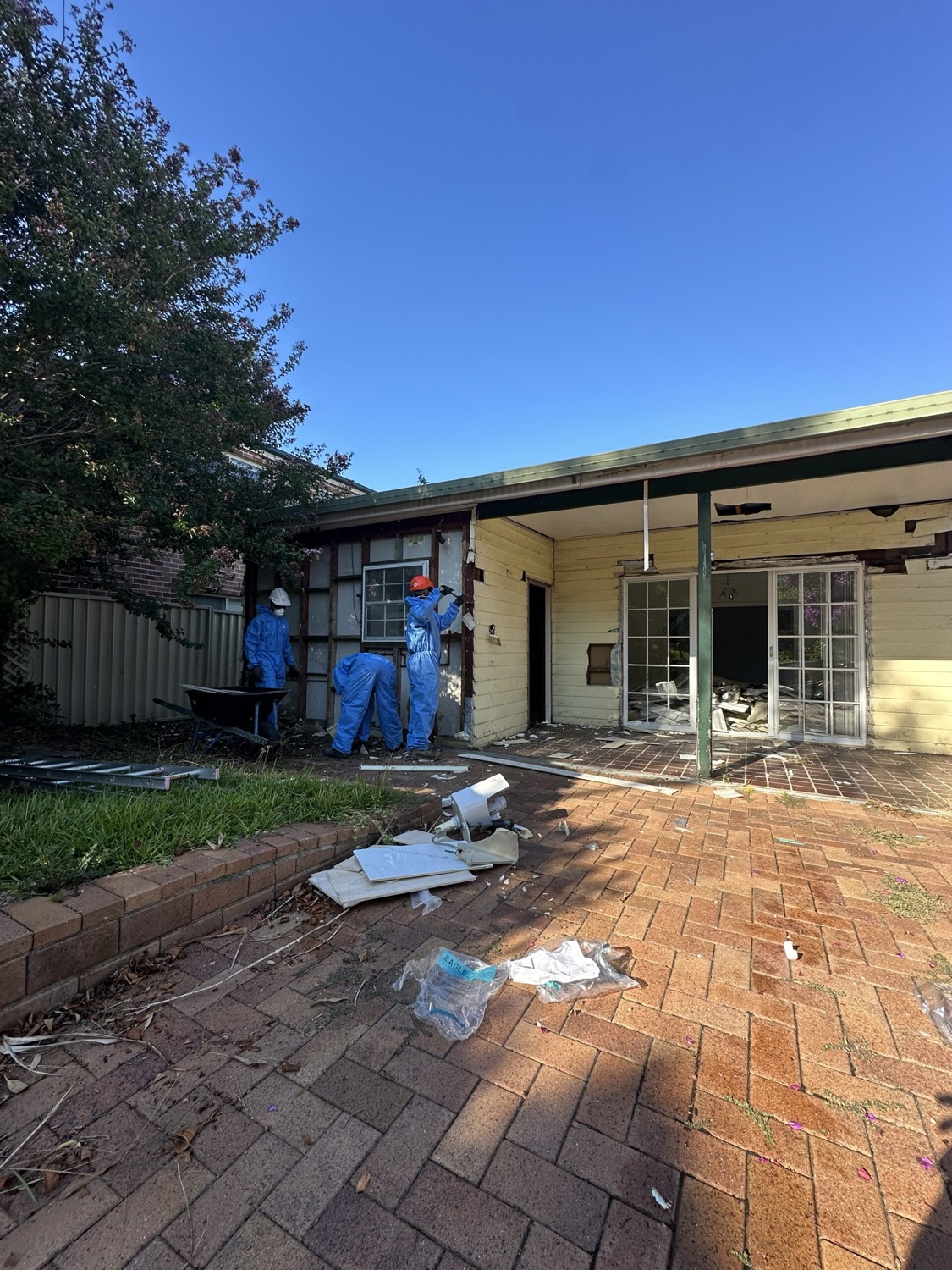
Asbestos Removal Cost in Sydney (2026): Prices, Factors & What’s Included
Indicative 2026 asbestos removal prices for Sydney — per square metre, roofs, small jobs and friable work — plus what drives the cost and what a complete quote must include.
Read Article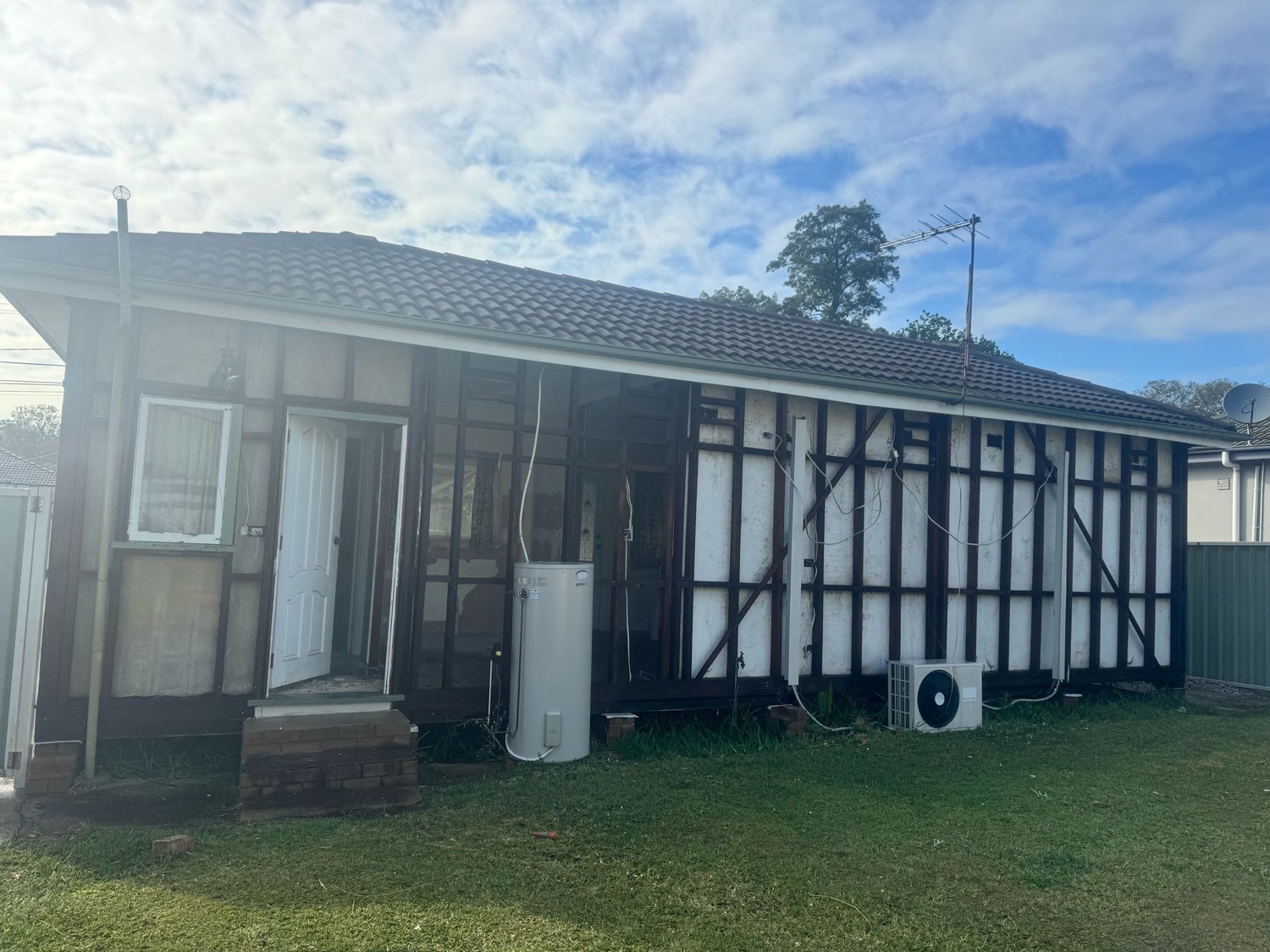 Costs
Excavation Cost in Sydney (2026): Site Cuts, Bulk Excavation & Spoil Removal
What excavation really costs in Sydney in 2026 — hourly machine and truck rates, typical site cut and bulk dig prices, and why spoil classification is the cost most people miss.
Read Article Guides
Pool Removal in Sydney: Cost, Process & Approvals (2026 Guide)
Partial or full removal? What pool removal costs in Sydney in 2026, how the process works step by step, which approvals to check, and what to know before building over the area.
Read Article