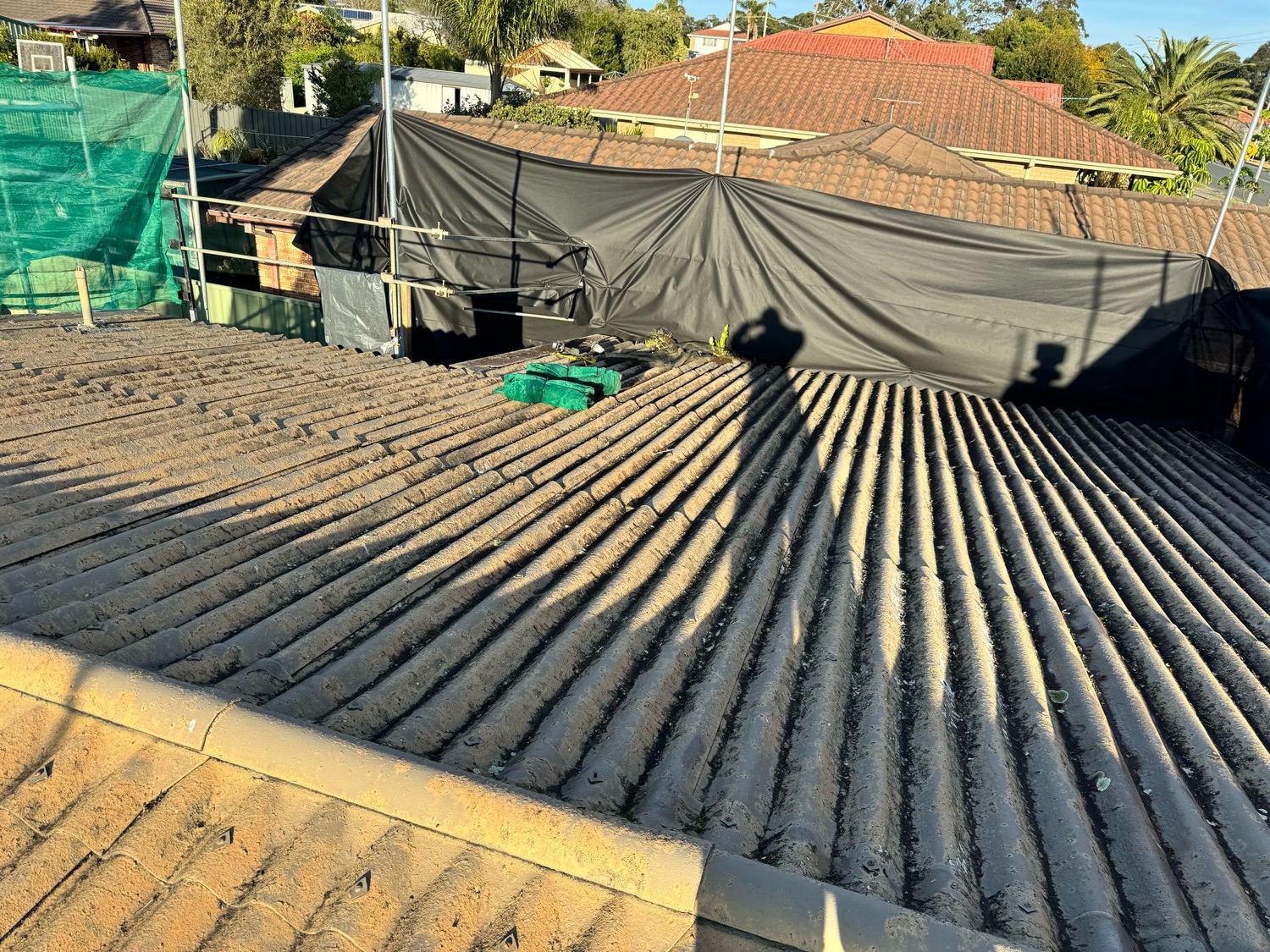
- Homes built or renovated before the late 1980s often contain asbestos; it was banned in Australia at the end of 2003.
- You can’t identify asbestos by sight. Testing by an accredited laboratory is the only way to be sure.
- In NSW, more than 10 m² of bonded asbestos needs a licensed removalist, and friable asbestos always needs a Class A licence.
- Before demolition or renovation, asbestos likely to be disturbed must be identified and removed first.
If your Sydney home was built or renovated before the late 1980s, there’s a real chance it contains asbestos. It was cheap, durable and everywhere — and while it’s perfectly safe when undisturbed and in good condition, demolition and renovation are exactly the activities that disturb it. Knowing where it hides, and why it needs licensed handling, protects your family and everyone on site.
Where asbestos hides
Common locations in older Sydney homes include:
- Eaves, soffits and gable ends
- Fibro wall and fence sheeting
- Vinyl floor tiles and the backing under lino
- Wet-area sheeting behind tiles in bathrooms and laundries
- Roofing, ridge capping and flue pipes
- Insulation around old heaters and hot-water systems
Bonded vs friable
Bonded asbestos — like solid fibro sheeting — holds its fibres tightly and is lower risk while intact. Friable asbestos is loose or crumbling and releases fibres far more easily, so it carries stricter handling and licensing requirements. Both need to be treated with respect; the difference determines how removal is carried out and by whom.
Why licensed removal matters
Disturbing asbestos releases microscopic fibres that cause serious, irreversible lung disease decades later. Licensed removal means proper containment, the right protective equipment, controlled removal, air monitoring where required, and disposal at a licensed facility — with a clearance certificate to prove the area is safe. It’s not a DIY job, and for friable material and larger quantities it’s a legal requirement.
When was asbestos used in Sydney homes?
Asbestos cement products, known as fibro, were used widely in Australian homes from the 1940s until the mid-1980s, and asbestos was banned nationally from 31 December 2003. Homes built or renovated before 1990 are the most likely to contain it, and many Sydney suburbs built after the war, from Penrith and Blacktown to Canterbury-Bankstown and the Shire, have large numbers of fibro homes.
How to tell if a material contains asbestos
You can’t tell by looking. Fibro sheeting, vinyl tiles and roofing that contain asbestos look much the same as asbestos-free versions. The only reliable way to know is to have a sample tested by an accredited laboratory, or to have an asbestos survey carried out before renovation or demolition. Testing is quick and inexpensive compared with the cost of disturbing asbestos by mistake.
What to do if you think you have asbestos
- Don’t drill, cut, sand, break or water-blast the material.
- If the material is damaged, keep people away from the area and avoid spreading dust.
- Arrange testing before any renovation or demolition work starts.
- If asbestos is confirmed, get a quote from a licensed removalist and plan removal before other trades start.
Can you remove asbestos yourself in NSW?
Homeowners in NSW can legally remove up to 10 m² of bonded (non-friable) asbestos themselves, but it must be done safely and disposed of at a facility licensed to accept it. More than 10 m² of bonded asbestos requires a licensed removalist, and friable asbestos must only ever be removed by a Class A licence holder. Most homeowners choose a licensed removalist because of the health risk, the protective equipment needed and the disposal rules. See asbestos.nsw.gov.au for official guidance.
Asbestos and renovations
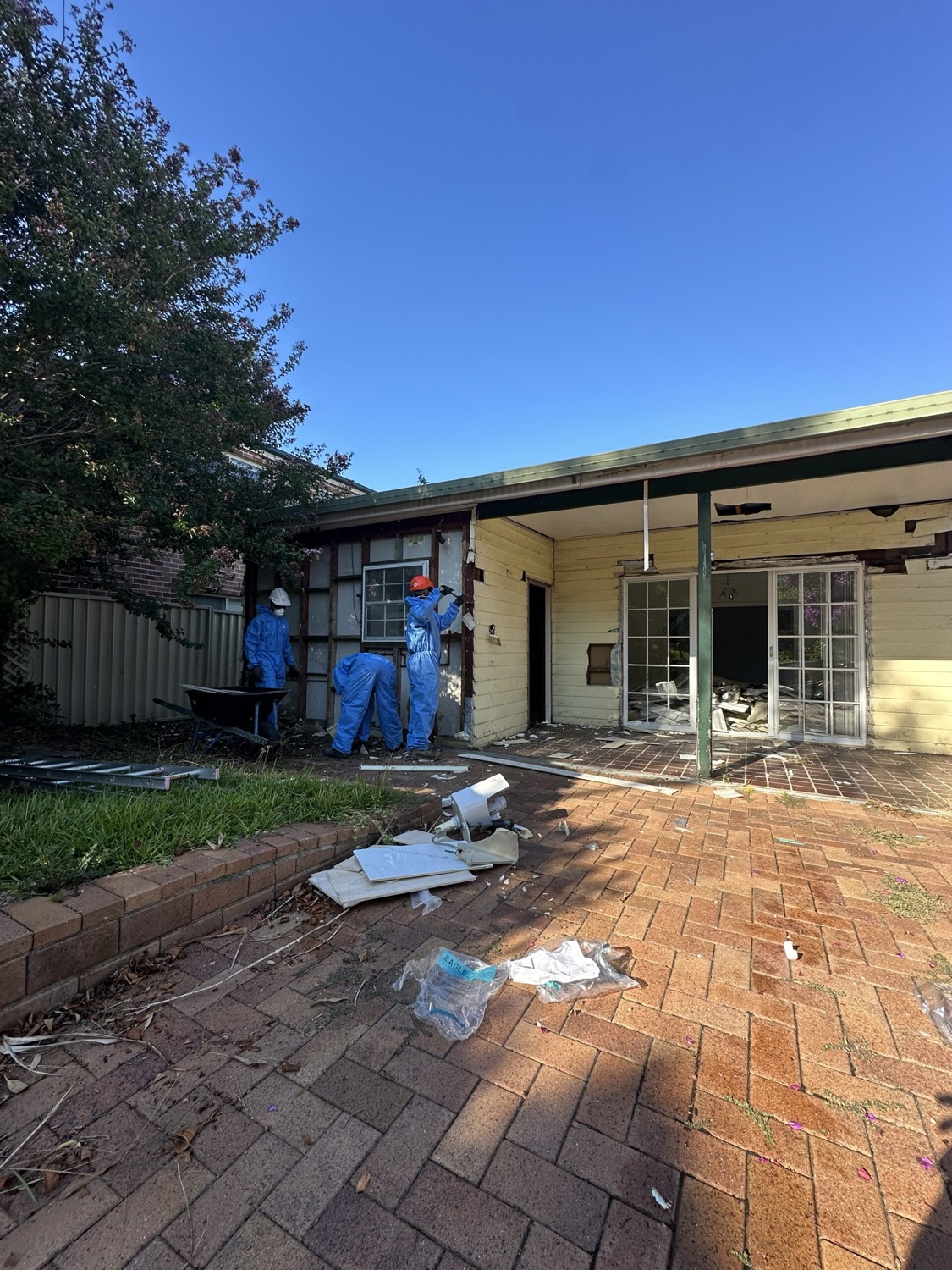
Renovations are the most common way asbestos is disturbed. Removing old bathroom linings, replacing vinyl floors, cutting new openings in fibro walls or replacing eaves can all release fibres. Before a renovation or strip out, have suspect materials tested and removed so the rest of the work can go ahead safely.
Asbestos removal before a demolition: the order of works
On a demolition, asbestos is handled first so the rest of the job can proceed safely. The usual sequence is:
- Inspection and, where needed, an asbestos survey or sample testing
- An asbestos removal control plan, and notice to SafeWork NSW for licensed removal
- Removal by the licensed team, with the work area set up and the material wrapped and sealed
- Decontamination, then a clearance inspection, with air monitoring where required
- The clearance certificate is issued, and the main demolition starts
Because H&R holds asbestos licensing alongside our demolition crews, this all happens within one program. See our asbestos removal service and house demolition pages.
Disposal and paperwork
Asbestos waste must be wrapped, labelled and taken to a facility licensed to accept it. Loads over 100 kg or more than 10 m² must be tracked through the NSW EPA’s WasteLocate system. After licensed removal you should receive disposal records and a clearance certificate confirming the area is safe.
Handled in-house
Because H&R holds asbestos licensing alongside our demolition and excavation crews, we identify and remove asbestos as part of the one program — no separate contractor, no gap, and full documentation. If you’re planning a demolition or renovation on an older home, talk to us first.
Frequently asked questions
Sources & further reading
- SafeWork NSW — Asbestos
- SafeWork NSW — Class A asbestos removal licence
- SafeWork NSW — Class B asbestos removal licence
- NSW Government — Asbestos information (asbestos.nsw.gov.au)
- NSW EPA — Dealing with household asbestos
Requirements referenced in this article were checked against the sources above on 20 October 2026. Prices are indicative and reviewed periodically — your fixed price always comes from a site inspection.
H&R Demolition & Excavation
H&R is a licensed and insured Sydney demolition, asbestos removal and excavation contractor. Our guides are written from the work our crews carry out on Sydney sites and are checked against current NSW requirements from SafeWork NSW, the NSW EPA and NSW Planning before they are published.
Ready to talk to the team?
Free, no-obligation quotes for demolition, asbestos and excavation across Sydney.
More Articles
 Costs
Asbestos Removal Cost in Sydney (2026): Prices, Factors & What’s Included
Indicative 2026 asbestos removal prices for Sydney — per square metre, roofs, small jobs and friable work — plus what drives the cost and what a complete quote must include.
Read Article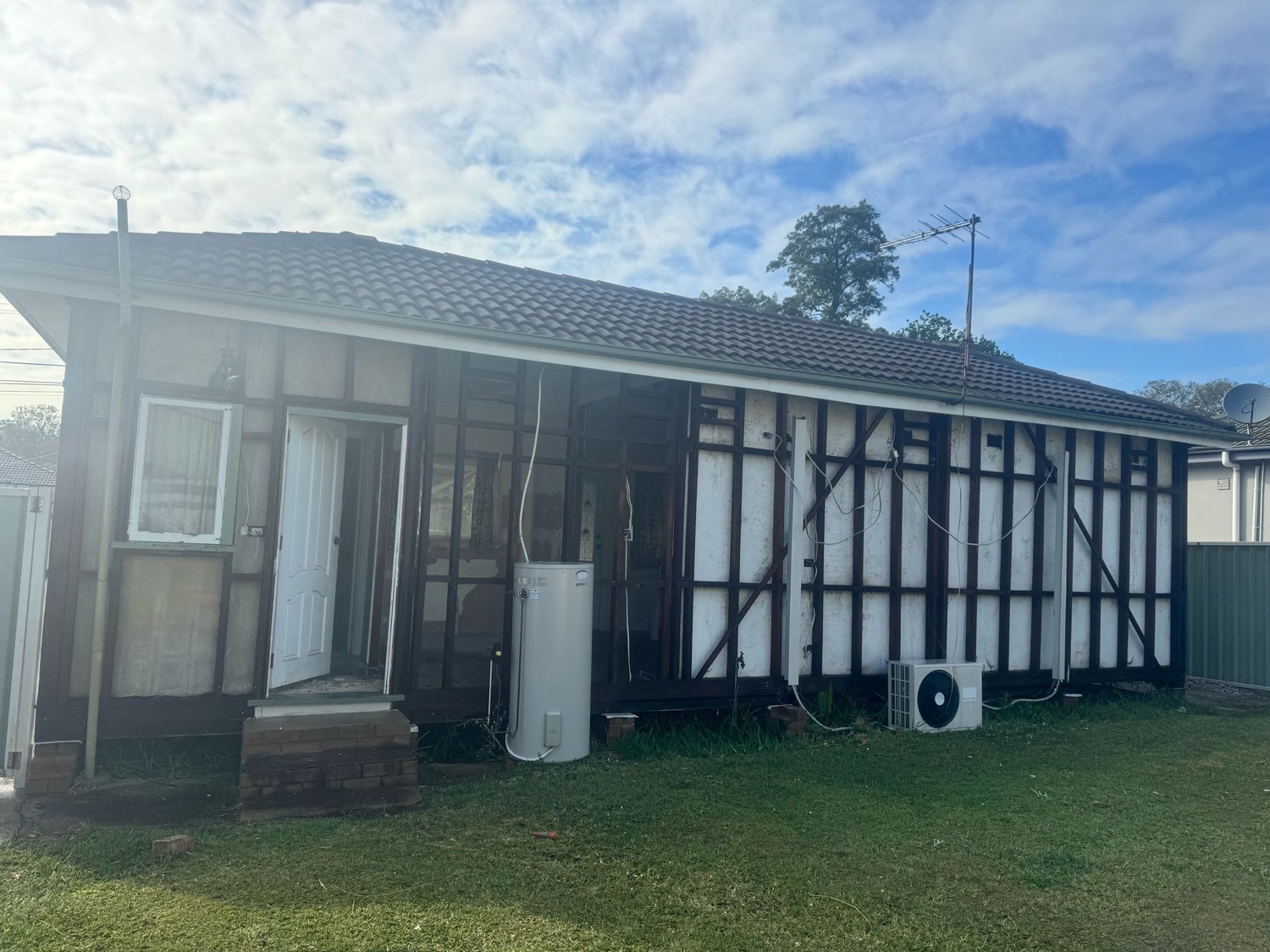 Costs
Excavation Cost in Sydney (2026): Site Cuts, Bulk Excavation & Spoil Removal
What excavation really costs in Sydney in 2026 — hourly machine and truck rates, typical site cut and bulk dig prices, and why spoil classification is the cost most people miss.
Read Article Guides
Pool Removal in Sydney: Cost, Process & Approvals (2026 Guide)
Partial or full removal? What pool removal costs in Sydney in 2026, how the process works step by step, which approvals to check, and what to know before building over the area.
Read Article